
Tapestry is Sunsetting
The UUA is no longer updating Tapestry of Faith programs.
Part of Faith like a River: Themes from Unitarian Universalist History
-
Leader Resource 1: A History of CovenantFrom Faith Like a River
The free church tradition of which we are a part does not offer up a creed, a certain set of beliefs, that everyone must accept in order to belong to the community. Instead, the boundaries of our community are determined by commitment and participation. Our central question is not “What do we…
-
Leader Resource 1: Background - HeresyFrom Faith Like a River
Author Leonard Levy, in his book Blasphemy, notes that “heresy” is not a Hebrew term. In fact, there is no equivalent for it in the Pre-Christian era. Heresy, a view not consistent with the church, depends entirely on the existence of an orthodox religion. Both orthodoxy and heresy were foreign…
-
Leader Resource 1: Background: Saints and MartyrsFrom Faith Like a River
In Christianity, the term “saints” originally referred to “all believers”—as in the hymn, For All the Saints. But the meaning of saint changed during the Roman Empire’s persecution of Christians, and “martyr” became the prototype of saint….
-
 Leader Resource 1: Cecilia Payne-Gaposchkin, PhotographFrom Faith Like a River
Used by permission of the Smithsonian Institution Archives. Image SIA2009-1325.
-
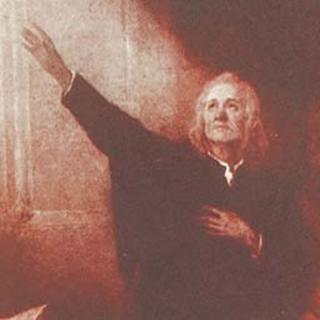 Leader Resource 1: Francis David, PortraitFrom Faith Like a River
From the Unitarian Universalist Association archives.
-
 Leader Resource 1: John Murray, PortraitFrom Faith Like a River
From the Unitarian Universalist Association archives.
-
Leader Resource 1: Religious ToleranceFrom Faith Like a River
This workshop explores different faces of religious tolerance. Religious tolerance includes the notion that the practice of different religions should be permitted and that different religious beliefs should be accepted and understood to be valid….
-
Leader Resource 1: Schedule TemplateFrom Faith Like a River
WORKSHOP TITLE DATE/TIME 1 Wading In — An Introduction 2 Against the Flow — Orthodoxy and Heresy 3 Rising Tides — Reason as a Religious Source 4 The Verdant Springs — Reform(ation) 5 God’s Gonna Trouble the Water — Martyrs and Sacrifice 6 Shall We Gather at the River? — Religious…
-
Leader Resource 1: Slavery and AntislaveryFrom Faith Like a River
The debate about slavery in the United States proved contentious within both Unitarianism and Universalism. While some of the country’s leading abolitionists were women and men who identified as Unitarian or Universalist, each of the young denominations struggled to articulate a unified stand.
-
Leader Resource 1: The 1893 Worlds Parliament of ReligionsFrom Faith Like a River
The World’s Columbian Exposition, a spectacular and exuberant world’s fair, was held in Chicago on the shores of Lake Michigan in 1893 to commemorate the 400th anniversary of Columbus’ arrival in North America. The architecture alone, Daniel Burnham’s “White City,” was unlike any other temporary…
-
Leader Resource 1: The Words of Quillen ShinnFrom Faith Like a River
Writings of the Reverend Quillen Hamilton Shinn (1845-1907). I am not on a pleasure trip wholly; the grandest recreation I get is working to spread our faith. Every liberal thinker in all this region is my parishioner. I own the mountains. Upon entering a new place the first impulse is to find if…
-
Leader Resource 1: Unitarian Universalist IdealismFrom Faith Like a River
Unitarian Universalism has historically embraced both an exalted view of human nature and a confidence in the grace of God. Our Universalist forebears embraced the doctrine that all are saved….
-
Leader Resource 1: What is Polity?From Faith Like a River
Definitions from Donald K. McKim, Westminster Dictionary of Theological Terms, (Louisville, KY: Westminster John Knox Press, 1996). DEFINITIONS Polity (from Greek, politeia, and Latin, politia, “administration of a commonwealth), a form of church government adopted by an ecclesiastical body.
-
 Leader Resource 1: William Ellery Channing, PortraitFrom Faith Like a River
From the Unitarian Universalist Association archives.
-
Leader Resource 1: Youth Lead the WayFrom Faith Like a River
There were a number of other consolidations and collabrations between Unitarian and Universalist organizations which paved the way for the consolidation of the American Unitarian Association and the Universalist Church of America. A few individual churches merged and some ordained ministers held…
-
Leader Resource 2: A History of Statements of BeliefFrom Faith Like a River
The concepts of voluntary association and freedom of belief were important in the developing Universalist faith, as they were in Unitarianism. Just as the Cambridge Platform of the Puritans was to set the stage for Unitarian societies in North American, so the early history of Universalism in…
-
Leader Resource 2: An Heretical HistoryFrom Faith Like a River
From the video Unitarian Universalism: An Heretical History, produced by the Unitarian Universalist Church of Rockford, IL, 1995. Used with permission. Transcript: The roots of Unitarian Universalism begin at the time of Jesus of Nazareth. We sometimes forget that the earliest followers of Jesus…
-
Leader Resource 2: Freedom of BeliefFrom Faith Like a River
Full religious tolerance requires acceptance of faiths different from yours as well as acceptance of diverse beliefs among people in your own faith community. The mid-19th century was a time when Unitarianism was called to evaluate the strength of its own notion of tolerance, and to question the…
-
Leader Resource 2: From Antitrinitarian to UnitarianFrom Faith Like a River
The five readings requested below are provided on Handout 2, Defining Moments. Distribute Handout 2, Defining Moments and invite volunteers to read quotes from the handout as indicated while you present this material….
-

-
Leader Resource 2: Michael ServetusFrom Faith Like a River
Michael Servetus (pronounced Sir-VEE-tus) (c. 1511-1553) was the most celebrated martyr of the 16th century. His writings include the first systematic description of antitrinitarian thought….
-
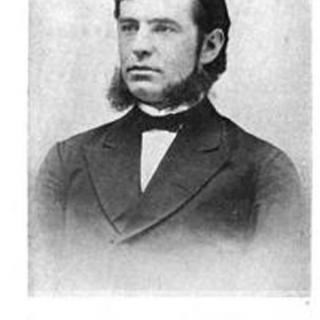 Leader Resource 2: Quillen Hamilton Shinn, PortraitFrom Faith Like a River
From the Unitarian Universalist Association archives.
-
Leader Resource 2: ReformationFrom Faith Like a River
Ever since there have been faith communities, there have also been reform movements, efforts focused on the spiritual renewal of the members of the community, and on the mission of the institutions themselves. In the first century, The Apostle Paul wrote of spiritual renewal and reform in his…
-
-
Leader Resource 2: The Historical Parade of MembershipFrom Faith Like a River
The notion that it is the right of every congregation to determine its own qualifications for membership is basic to congregational polity….
-
Leader Resource 2: Time Line of Reason as a Source of Religious BeliefFrom Faith Like a River
Reason can be described as “the mental capacity or power to use the human mind in reaching and establishing truth.” Reason has played an important role in religion since the Greek philosophers pronounced it a masterful principle of Creation, and human knowledge to be a result of the free exercise…
-
Leader Resource 2: Unitarian Universalism around the WorldFrom Faith Like a River
Africa In 2000, there were only a handful of Unitarian Universalist congregations in Africa. Now there are dozens. The first Unitarian Universalist churches were founded in South Africa, where four congregations were organized between 1867 and 1986, and in Nigeria. In Lagos, Nigeria, the First…
-
Leader Resource 2: Universal Salvation to UniversalismFrom Faith Like a River
Universal salvation, or universalism, is the theological belief that, through the goodness, mercy and love of God, all people will be saved; that is, all people will be forgiven their sins and granted eternal life. The idea that all people would be saved is a very old one….
-
Leader Resource 2: World SituationFrom Faith Like a River
One of the most remarkable periods of idealism for both Unitarianism and Universalism arose during the 1800s. Spurred by the mechanical and industrial revolutions, the 19th-century was a time of great fermentation of new ideas. On the scientific front, the century saw the development of general…
-
Leader Resource 3: A Community of CongregationsFrom Faith Like a River
While freedom and independence were among the first concerns of those who founded the first Universalist churches and the precursors to the Unitarian churches, so, too, was association….
-
Leader Resource 3: Embracing the Religions of the WorldFrom Faith Like a River
In the Unitarian and Universalist traditions, there have always been individuals who express not only tolerance toward other’s religions, but also acceptance of, curiosity about, and even embrace of faiths other than their own….
-
Leader Resource 3: Kindred SpiritsFrom Faith Like a River
Angus MacLean and Sophia Lyon Fahs, two of the most important religious educators for the Unitarian, Universalist, and Unitarian Universalist movements, left indelible—and foundational—marks on the landscape of liberal religious education. Angus MacLean was Professor of Religious Education and…
-
 Leader Resource 3: Mary Livermore, PortraitFrom Faith Like a River
From the Unitarian Universalist Association archives.
-
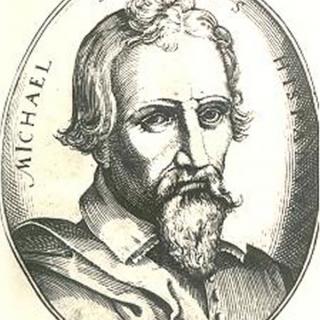 Leader Resource 3: Michael Servetus, PortraitFrom Faith Like a River
From the Unitarian Universalist Association archives.
-
Leader Resource 3: Shout It Out!From Faith Like a River
Though the word “evangelism” may cause discomfort for Unitarian Universalists, Unitarians and Universalists over the years have been creative in finding ways to spread the “good news” of their liberal faith. Many of these efforts involved print media. As early as the 16th century in Europe,…
-
Leader Resource 3: Sources of Religious KnowledgeFrom Faith Like a River
Throughout the course of human history, many have attempted to create meaning and search for truths. With this came the need to establish the sources of religious knowledge and authority. The earliest religions were based on oral traditions as history, culture, and worldview was passed from…
-
Leader Resource 3: The Racovian CatechismFrom Faith Like a River
The Racovian Catechism was first published in 1605 in Rakow, Poland, the center of 16th-century Polish Unitarianism, the only town in the world where Unitarians were in the religious majority. From the mid-sixteenth century, inhabitants of this area had enjoyed nearly unprecedented freedom of…
-
Leader Resource 3: Theology and InstitutionFrom Faith Like a River
Reform comes in many ways, both inadvertent and intentional, and affects many areas of congregational life. Most often, reform efforts are directed toward either theology or institutional structures. Here are a few stories of reform efforts and their outcomes, both intended and unintended. The…
-
Leader Resource 3: TranscendentalismFrom Faith Like a River
In the climate of 19th-century Romanticism, a philosophy of religion arose that incorporated the new ideal of personal emotional experience. Transcendentalism was never an organized religion in its own right; many who espoused a Transcendentalist philosophy remained part of the Unitarian church….
-
Leader Resource 3: We are UniversalistsFrom Faith Like a River
Phineas Taylor Barnum (1810-1891) — “The noblest art is that of making others happy, honesty, sobriety, industry, economy, education, good habits, perseverance, cheerfulness, love to God and good will toward men.” This was the philosophy of P. T. Barnum, the greatest American showman of the 19th…
-
Leader Resource 3: Women, Faith, and ServiceFrom Faith Like a River
Unitarian and Universalist women have a history of creating important organizations of their own. Some of these organizations came to play a role in supporting the work of Unitarians and Universalists in places beyond their own country’s borders. In 1869, the Women’s Centenary Aid Association was…
-
Leader Resource 4: Evolutions of Ordained MinistryFrom Faith Like a River
Unitarian In the list of men who subscribed to the 1637 covenant of community of Dedham, Massachusetts appear the names John Allin and John Hunting….
-
Leader Resource 4: International OrganizationsFrom Faith Like a River
The International Association for Religious Freedom (IARF) Following the success of the 1893 World’s Parliament of Religions, there was interest in forming an organization that could continue the work of bringing together different religious groups in dialogue and cooperation. In 1900, the…
-

-
Leader Resource 4: Norbert CapekFrom Faith Like a River
Norbert Capek (1870-1942) (pronounced CHAH-pek) was a Unitarian minister who, with extraordinary energy, talent, and commitment, brought the Unitarian faith from the United States to thousands in Czechoslovakia….
-
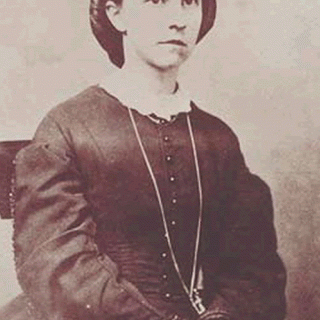 Leader Resource 4: Olympia Brown, PortraitFrom Faith Like a River
From the Unitarian Universalist Association archives.
-
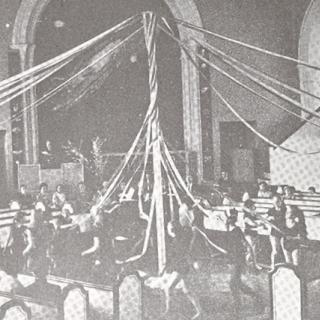 Leader Resource 4: Photo of Beltane at Charles Street Meeting HouseFrom Faith Like a River
From the Unitarian Universalist Association archives.
-
 Leader Resource 4: Photos of Early 1900s Universalists in North CarolinaFrom Faith Like a River
From the Unitarian Universalist Association archives.
-
Leader Resource 4: Stronger Than We LookFrom Faith Like a River
First Story When the Unitarian Universalist Association (UUA) conceived, created, and promoted a sexuality education program for youth, the project had no parallel in contemporary secular or religious education. Here’s what happened. In the mid-1960s, the United States experienced liberation…
-
Leader Resource 4: The TranscendentalistsFrom Faith Like a River
Our age is retrospective. It builds the sepulchres of the fathers. It writes biographies, histories, and criticism. The foregoing generations beheld God and nature face to face; we, through their eyes. Why should not we also enjoy an original relation to the universe?…
-
Leader Resource 4: Words of the TranscendentalistsFrom Faith Like a River
The Religion that is afraid of science dishonours God and commits suicide. It acknowledges that it is not equal to the whole of truth, that it legislates, tyrannizes over a village of God’s empires but is not the immutable universal law….
-
Leader Resource 5: Life-Changing BeliefsFrom Faith Like a River
Even as a young girl, Mary Ashton Rice Livermore was tortured by the idea that only some were destined for salvation. She would awaken her parents in the middle of the night begging them to pray for her sisters lest their souls be eternally lost….
-
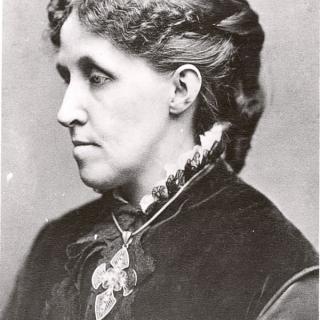 Leader Resource 5: Louisa May Alcott, PortraitFrom Faith Like a River
From the Unitarian Universalist Association archives.
-
Leader Resource 5: Maglipay UniversalistFrom Faith Like a River
The title means “be joyful, Universalist.” You can see a video of a congregation singing this hymn. Be joyful, Universalist, come celebrate our convention. Officials, members, all unite, rejoicing in debate that’s free, To teach the Universal Light….
-
Leader Resource 5: Membership Debate ScenariosFrom Faith Like a River
Make a copy of this resource and cut it in half, the PRO section on one half and the CON section on the other half. PRO: It is 1963, in Chicago, and you are delegates to the UUA’s General Assembly. You support an amendment to the UUA’s Constitution and Bylaws that would require congregations to…
-
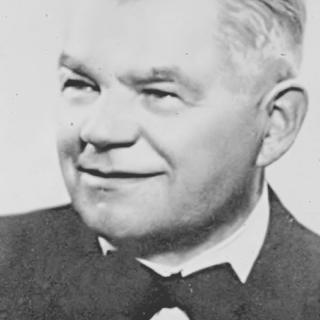 Leader Resource 5: Norbert Capek, PhotographFrom Faith Like a River
From the Unitarian Universalist Association archives.
-
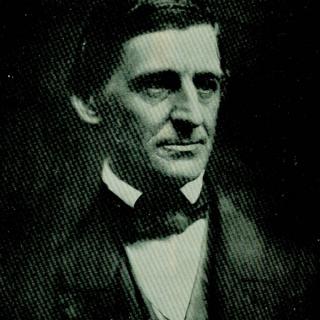 Leader Resource 5: Ralph Waldo Emerson, PortraitFrom Faith Like a River
From the Unitarian Universalist Association archives.
-
Leader Resource 6: Paradise Is OursFrom Faith Like a River
In modern, Western, Christian conception, salvation occurs only after death. In their book Saving Paradise (Beacon Press, 2008), Rita Nakashima Brock and Rebecca Ann Parker write, “Theologians speak of sacred and profane time, of salvation history and of hope. They interpret the expulsion of Adam…
-
Leader Resource 6: SpiritualismFrom Faith Like a River
The spiritualist movement that emerged in Europe and the United States in the 19th century held that humans could communicate with the spirits of those who had departed the earthly realm….
-
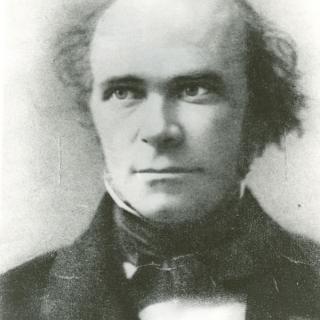 Leader Resource 6: Theodore Parker, PortraitFrom Faith Like a River
From the Unitarian Universalist Association archives.
-
Leader Resource 7: Origen of AlexandriaFrom Faith Like a River
Origen of Alexandria (c. 185-250 CE) was an early Christian theologian who articulated ideas of universal salvation in ways that led his critics to charge him with heresy centuries after his death. From all accounts, Origen was a brilliant, gifted, and prolific scholar who studied science,…