
WorshipWeb is grateful to the Revs. Heather Concannon, Allison Palm, and *Aisha Ansano for allowing us to share their wisdom in these excerpts from Blessing It All: Rituals for Transition and Transformation.
What Is a Ritual?
The urge to create rituals to mark life passages is a deeply human one, almost instinctual, and can be seen across time and across cultures. From Stone Age burials to “Taps” on the trumpet, from confirmations to quinceañeras, from jumping the broom to breaking the glass, humans find ways to mark the important moments in their lives and in their communities.
The word ritual can mean many different things, both secular and religious. In [Blessing It All], we define a ritual as an embodied and participatory way to mark a transition or facilitate a transformation. In so doing, rituals connect us to something larger than ourselves—to community, to the holy, to the seasons, to the cycles of life and death.
Rituals Facilitate a Transformation or Mark a Transition
Rituals can serve two distinct yet related functions. On the one hand, a ritual can connect us to our aspirations, facilitating a transformation; for example, it can help us discern something or let something go. On the other hand, it can mark a transition that has already occurred, affirming a change that has already taken place, such as using a new name or pronouns, or making a commitment to a life partner. In either case, at their core rituals create a container for change, whether that change is simple and mundane or profound and even life-changing.

Backpack Blessing
A backpack blessing is one of the emerging rituals celebrated by UU congregations.
Rituals do not have to happen at one specific point in a transition. A ritual done prior to a transition can help ease the way into it, help us say goodbye to what we must let go of in order to grow in a new way. A ritual held in the midst of a transition can facilitate change, healing, and growth. And a ritual done after a transition can help us to process what has just happened, to more fully accept a change we did not want, or to name a new stage that we have entered.
Rituals Are Embodied
Christian hegemony and white cis-heteropatriarchy have left us with a legacy of disconnection from our bodies. These systems of power and control have taught us to privilege minds over bodies, intellect over emotion, theories over experience. Any body that is considered less than the ideal—including black and brown bodies, women’s bodies, trans bodies, fat bodies, disabled bodies—is devalued at best and excluded, threatened, or killed at worst.
Rituals reclaim our connection with our bodies. They call us back into our bodies, into the present moment, into the room with one another. They remind us that the only way that we can experience the world, the holy, our relationships is through the bodies we inhabit. In that way, they are an act of resistance to disconnection from and disdain for our bodies.
Rituals invite us into a different way of knowing—a way of experiencing our values or theology as more than words on a page.
Rituals Connect Us to Something Larger Than Ourselves
There is a reason that many religious and cultural traditions have rituals that are repeated generation after generation. Rituals connect us both to our deepest selves and to something larger than ourselves—to our community, to our faith, to the generations that have come before us and will come after us, to the grand story of the universe, and to the love that holds us and will not let us go.
Rituals connect us to our community by reminding us that we are not alone in this hard and beautiful work of being human. Rituals connect us as individuals to a people, whether it is our family, our congregation, or those with whom we share an identity or cultural heritage.
Rituals also connect us to a larger human story that spans generations. Regardless of whether a particular ritual is newly created or a long-standing tradition, the knowledge that other people in other times have had the same longings, questions, worries, and sorrows can be powerful.
Finally, rituals connect us to our faith, to our sense of what some people call the holy—you might use that word or a different one. They remind us of the love that holds and sustains us, of the sacredness of our earth, and of the most deeply held values that guide our living.
*Rituals from Other Traditions
[A]s a tradition with historical roots in Christianity but with many members who don’t identify as Christian, we can struggle to discern which rituals from our history still feel like ours.
When we yearn for rituals that we aren’t finding in our own tradition, it’s easy to turn to other cultures and religious traditions, to take customs and rituals that speak to us and try to make them our own. It may be a relief to find that a ritual already exists to give us what we are yearning for, to feel that we do not need to create our own from scratch…
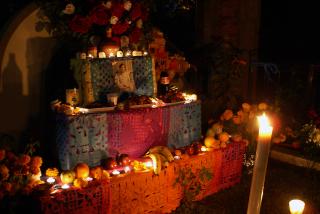
When we are longing to remember and honor the people in our lives who have died, it is tempting to reach for established customs such as Día de los Muertos even if we do not have Mexican heritage, or the yahrzeit even if we do not hold a Jewish identity. These observances already exist, and we know that they are deeply meaningful for many—and so we may convince ourselves that they can be meaningful for us, as well. But the power of these particular rituals is rooted in specific cultural and religious histories and experiences, and if we do not share those, then the rituals are not ours to use. When we choose to use them anyway, whatever our intention, we risk diminishing their meanings and harming the potential relationships between us and those for whom they hold familial, cultural, or religious significance.
Space and Setup
Rituals happen in all kinds of different spaces. Sometimes a ritual happens spontaneously, with no time to prepare the space. That is okay. Your own energy as leader may be all you need to create the kind of environment in which powerful transformation can occur.
When you are able to take the time to set up a space, remember that the environment of a ritual sets the tone before any words are spoken. As you are creating the space for the ritual, think about the kind of atmosphere you want people to enter into. What is the emotional goal of the ritual? Is it celebratory, somber, reflective, empowering? How can the space reflect that through its lighting, imagery, altar decorations, and sound as people enter the space?
Consider also the flow of the space. In addition to being beautiful, is it practical? Is there room for people to move around if they need to? Or are there places that risk traffic jams and collisions? For example, if people need to move to the front of the space and then back to their seats, is there enough space to do that? Is there enough space for people using assistive devices like wheelchairs or scooters? What instructions will you need to offer?
Gather all of your materials in advance, and think about where and how they will need to be used during the ritual. Do you have a place to lay your script down if you will need both hands? If you are passing around stones, do you have a container to hold them? Do you have a way to play recorded music or a way to project any slides or videos?
Taking the time to think through the space and setup can ensure that the space works in service of the ritual rather than against it and that logistical challenges will not impede its beauty and transformative power.
Accessibility
The Inherent Worth and Dignity of All Bodies
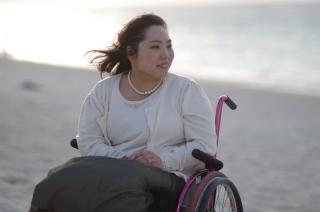
Every body is the location of holiness—not just able bodies.
The embodied, participatory nature of rituals makes it particularly important to be mindful of accessibility. In making rituals accessible, we are embodying our values and theology: Unitarian Universalists, along with many others, believe that all people are whole and holy, that all bodies are good bodies, and that we are called to place justice and love at the center of our faith.
It is important to consider how participants with a wide variety of mobility, sensory, allergy, and processing needs will experience all parts of the ritual: how they will enter into its space, how they will eat any food or drink involved, how they will perceive what is happening, how they will join in any shared words or movements. A ritual offered to the public will probably need to allow for a wider set of needs than one planned for a few people, but don’t assume you know all the needs even of close friends. It is always better to err on the side of greater accessibility.
An expansive collection, the rituals in Blessing It All foster community, joy, and healing in moments like the joining of a blended family, changing names and pronouns, honoring Pride Month, having an abortion, getting a prosthesis, surviving sexual assault, ending a marriage, and so many others.
The rituals—written by a diverse array of contributors with lived experiences that add depth and authenticity to each offering—are designed to be led by anyone inspired to do so, with clear instructions and additional insights and guidance. They are suitable for communities, congregations, family, and individual use. And they can happen anywhere our lives happen, wherever people or families or communities gather, because that is where we encounter the holy.