Hateful violence and natural disasters touch all of us. You want to help our children, youth, and families to emotionally and spiritually process what is happening in and outside our communities. Here are some tips for grounding and creating a plan, with other resources to look to.
- Are you and yours okay? Take some time to initially ground yourself. This will be immensely helpful to know you are safe and whole before jumping into action mode. Be kind to yourself and each other, and give grace for the ways that traumatic experiences can impact our body, mind, and spirit. Learn about and attend to your own emotional regulation as a priority. Check in on the physical, emotional, and other immediate needs of your family and friends – and ask for the support you need to nourish and sustain your body and spirit. Make plans for eating and regulating with those closest to you to sustain you through caretaking periods. Covenant to stay connected to your community as a source of shared joy, strength, care, and purpose.
- Identify who is the most impacted and where you can help. Draw concentric circles and identify who is the most immediately impacted by the event. Identify which circle of care you’re best equipped to support, and how. There may be children and youth in your congregation with connections to the event that you aren’t aware of. Especially now, consider the impact and harm from collective trauma and targeted community violence, as well as more direct experiences with disaster and tragedy. Connect with professional colleagues and ministry partners intentionally and collaboratively in your planning.
- Consider how to adjust your “regular programming.”
- For families: Consider reducing, curating, and supervising the news coverage and related content you and your kids see now — and making special time to play, talk, and express feelings through art. Witnessing acts of violence on repeat, with no way to change the outcome can be particularly traumatic for our children and youth. In the links below, you’ll see suggestions for how to talk with young people about what they have seen and heard — and ways to connect, process, and co-regulate together.
- For religious professionals: Depending on how closely your community has been or will be impacted, you may want to shift regular programming entirely, or give guidance to volunteers to support shared processing of the event as needed (if it comes up in class check-ins, etc.). Consider providing additional support in an email to encourage family conversations now, and dedicated space and time for parents or youth to process with their peers. See the resources below for suggested faith development activities and ways to connect and care for each other now and in the days to come.
How to Talk About State Sanctioned Murder
This process was developed by the staff and lay leaders of First Universalist Church of Minneapolis in response to the murder of George Floyd (2020). This Message for All Ages video is an example of how this can be framed for your community.
- Talk about the person who died. Humanize them. Before you talk about their murder, share what you know about who they were and what made them special.
- Talk about their death in an age-appropriate way. What happened? Tell the truth.
- Talk about patterns of violence and oppression related to their death. Name the underlying problems that need to be addressed.
- Share what those most impacted by the violence say needs to be done.
- Talk about how you see people responding in specific, positive ways.
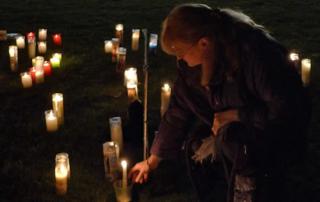
- Talk about how you can honor the life of the person who died (learn more about their life, light a candle in their honor, pray together, draw pictures for their loved ones/community, write letters to leaders, make signs to put in your window, go to vigils/protests).
- Tell them you will keep them, yourself and your neighbors safe.
- Tell them about the world we dream of, and that we will build it together, and that you love them.
Faith In Action
For UUs, action is a valid response. Prophetic witness of our UU values in the public square requires two things: a shared theological grounding, and shared accountability to it. It is essential to put love at the center. This means centering social action in compassion, and engaging in ways that keep those most impacted by violence and trauma in mind. Depending on your situation, public protest may not be safe or developmentally appropriate for everyone in your community. In congregational settings, we can safely prepare for and practice social action together, as a form of whole church faith development.
Public Witness activities build capacity for justice-seeking in UUs of all ages, as we name and proclaim our values together. They offer new ways to learn and share about UUism as a living faith and build meaningful connections across generations, with love at the center. In response to injustice, acts of shared public witness remind us of our collective power, reducing the anxiety and impact of traumatic events in the wider world.

Signs of Our Faith: Rituals of Public Witness and CelebrationRituals of Public Witness and Celebration
Children and adults come together to talk about and make signs with messaging that reflects and proclaims their understanding of UU theology and faith identity.

Neighborhood Love Notes as Sidewalk Chalk Theology
Communities of all ages use colorful sidewalk chalk to share messages that embody our theology and shared values, with love at the center.
Stories for Children and Families
- A Terrible Thing Happened, a story for children who have witnessed violence or trauma, by Margaret M. Holmes. Addresses the need for children to find a place to speak about their experiences. Video of author reading book aloud (YouTube).
- Something Happened in Our Town by Marianne Celano PhD, Marietta Collins PhD, et al (A Minneapolis Children’s Theatre Company Original) two families, one white and one Black, discuss a police shooting of a Black man in their community. Video of authors reading book aloud (YouTube).
- Momma, Did You Hear the News? By Sanya Whittaker Gragg and Kim Holt. Written by a social worker and parent, a Black family has “the talk” about what to do when approached by the police. Video of book being read-aloud (YouTube).
- Something Happened in Our Park Ann Hazzard PhD, Marianne Celano PhD, Marietta Collins PhD follow up to Something Happened in Our Town, a story of coming together after violence. Video of authors reading book aloud (YouTube).
- Talking about Death: A Dialogue between Parent and Child by Earl A. Grollman (Beacon Press, 2011)
Meditations and Readings
- Beyond Absence: A Treasury of Poems, Quotations, and Reading on Death and Remembrance, collected by Edward Searl (Skinner House, 2005). See a prayer by Victoria Safford, page 117; “Love Abides,” by Barbara Pescan, page 144; and “We trust that beyond the absence,” by Anonymous, page154.
- Interfaith Vigil Invocation on Mass Violence, by Rev Lyn Cox
Additional Supports for Your Congregation
- If your congregation is directly impacted by violence, hatred, or trauma, the Unitarian Universalist Trauma Response Ministry offers a toll-free emergency number, 1-888-760-3332.
- Threats from Without, Care from Within — UUA course guiding you to provide care for your congregation when there are threatening situations in your community, against your congregation or congregants.
- ICE and Immigration Enforcement in Congregations. (UUA) Practical Guidance for Interactions with U.S. Immigration and Customs Enforcement (ICE)
- Making Meaning after Disaster (PDF) by Sarah Gibb Millspaugh, a Tapestry of Faith workshop for congregations, on the UUA website
- Together in Faith (PDF): Finding Home in Times of Trauma or Disaster by Tracey L. Hurd
Children and Trauma
Optional Resources: The following is a much longer list of more in-depth resources. Find what you need if it’s helpful, but don’t engage if it’s overwhelming.
- Talking with Children about Difficult Things in the News (PDF) from the Fred Rogers Institute
- Responding to Community Violence — Sesame Workshop. Highly accessible, engaging, bilingual resources specific to targeted community violence, for home or RE Includes videos, songs, stories, activities, webinar, research summaries, and parent support. Especially for children 0-6.
- Explaining the News to Our Kids (2025) by Common Sense Media. Violent events can leave us speechless. Knowing how and when to talk with kids—and when to listen—can help.
- How to Talk with Kids About Violence, Crime, War, and Tragedy (2024) by Common Sense Media. A brief article with tips for parents to hold conversations with kids.
- Talking to Children About Violence: Tips for Families and Educators (2023) from the National Association of School Psychologists.
- Supporting Children in the Face of Disaster or Trauma, by Tracey Hurd — Workshop and activities for children, families and intergenerational groups who have experienced a trauma or disaster. Written as a response to Hurricane Katrina, the workshop can be adapted for other events as well.
- Dear Fellow Black Parents: Talking with Our Children about Oppression and Liberation by Malaika Parker. A Black parent speaking to Black parents about how to have conversations about white supremacy and anti-Blackness which includes examples of age-appropriate language from infancy to young adulthood.
- Talking to Children about War and Terrorism: 20 Tips for Parents by David Fassler, MD
- The Terrorism section of the National Child Traumatic Stress Network’s website offers multiple fact sheets for processing a shooting tragedy with children, youth, and adults.
Community Trauma
- Seven medicines for healing collective trauma: (American Psychological Association). Psychology and Indigenous healers have found multiple medicines to reconcile our psychological wounds in community. Author Thema Bryant, PhD, is APA president and an ordained minister in the African Methodist Episcopal Church.
- How to Cope When Your Community is Under Attack (PDF): (2024 BIPOC Mental Health Toolkit). When communities face violence or discrimination, the resulting trauma from these attacks can be difficult to heal. Finding ways to process your feelings, feel more grounded, and take action can support you and your community in healing together. Use this worksheet to help you make a plan for how you will take care of yourself and your community if your community is under attack.
* With thanks to LREDA members and religious educators who contributed to this compilation of resources.